How to Make Your Own Dairy Feed: A Comprehensive Guide to Profitable and Efficient Milk Production
Benefits of preparing your own dairy feed, step-by-step formulation process, raw material selection, mixing, and application tips for profitable and efficient milk production.

How to Make Your Own Dairy Feed: A Comprehensive Guide to Profitable and Efficient Milk Production
Feed costs are one of the largest expense items in dairy farms. While ready-made dairy feeds provide a practical solution, formulating and preparing your own dairy feed is the most effective way to significantly reduce costs, gain full control over feed quality, and provide nutrition tailored specifically to your cows' needs. So how do you prepare your own dairy feed on your farm? Here's a step-by-step guide.
Benefits of Making Your Own Dairy Feed
- Cost Savings: You are less affected by fluctuations in raw material prices and can significantly reduce feed costs through bulk purchasing and direct sources.
- Quality Control: You can control the content and quality of the feed from start to finish. You reduce the risk of mold, toxins, or low-quality raw materials.
- Ration Flexibility: You can immediately adjust the ration for cows with different production levels, lactation stages, or physiological conditions (dry period, post-calving, etc.) within the herd.
- Animal Health and Performance: A ration designed specifically for your cows' actual needs supports rumen health, reduces the risk of metabolic diseases, and improves milk production and quality (fat, protein).
- Traceability: If a feed-related problem occurs, you can more easily identify the source because you know the content.
Steps to Prepare Your Own Dairy Feed
Creating your own dairy feed is a comprehensive process that combines scientific knowledge, precise planning, and practical application.
Step 1: Determine the Nutritional Needs of Your Dairy Cows
At the core of ration formulation is knowing what your animals need. The nutritional requirements of lactating cows vary based on many factors:
- Milk Production: How many liters of milk are produced daily (one of the most important factors).
- Lactation Stage: Early lactation (peak production, negative energy balance), mid-lactation, and late lactation (dry period).
- Body Weight and Condition: Live cow weight and body condition score (BCS) affect the energy content in the ration.
- Age and Breed: Needs may differ for young heifers compared to mature cows or different breeds.
- Pregnancy Status: Cows in late pregnancy (dry period) in particular have specific nutritional needs.
Based on this information, determine the daily amounts of **Dry Matter (DM)**, **Net Energy (NE)**, **Crude Protein (CP)**, **Digestible Fibers (NDF, ADF)**, and **Minerals/Vitamins** that your cows need. At this stage, obtaining support from an **expert agricultural engineer (animal scientist) or veterinarian** is crucial. Professional software and expertise make a big difference in creating an ideal ration.
Step 2: Select Raw Materials for Your Feed and Determine Their Quality
Knowing the nutritional value of each raw material you will use in your ration is vital for accurate formulation. When selecting raw materials, consider their nutritional value, digestibility, palatability, market availability, and cost-effectiveness.
- Forages (the backbone of the ration):
- Corn Silage: Forms the basis of lactating cow rations with its high energy and digestible fiber content. It is important that it is high quality and well-fermented.
- Berseem (hay/silage): A high source of protein and digestible fiber. Of particular value for high-producing cows.
- Grass Hay/Silage: Provides fiber and moderate energy levels.
- Straw: Although low in nutritional value, it provides the necessary structural fiber for rumen health and gives a feeling of fullness.
- Energy Sources (starch and sugars):
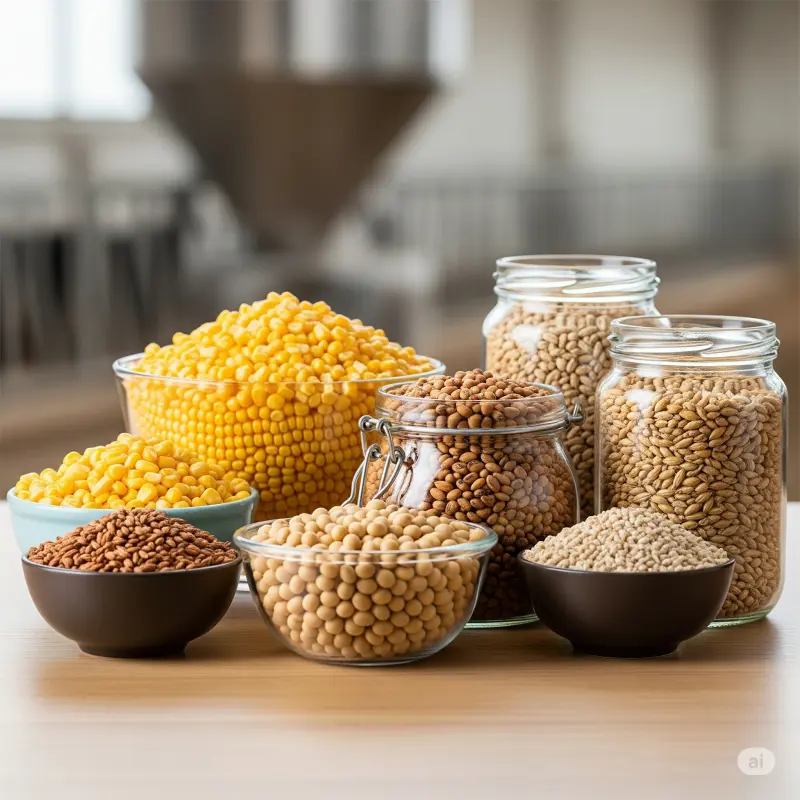
- Grains: **Rolled Barley**, **Cracked Corn**, and wheat provide high energy. Barley and corn differ in their digestion rates and rumen effects.
- Molasses: A quick energy source that is palatable and can increase feed intake.
- Beet Pulp: Provides digestible fiber and high energy, beneficial for rumen health.
- Protein Sources:
- Oilseed Meals: Products like **Soybean Meal** (most common and high quality), sunflower meal, and cottonseed meal are used to cover protein deficiencies in the ration. Bypass protein content is also important.
- Dried Distillers Grains with Solubles (DDGS): By-products containing both energy and protein.
- Sources of Minerals and Vitamins:
- Major minerals (calcium, phosphorus, magnesium, sodium, potassium, sulfur) and trace minerals (zinc, copper, selenium, manganese, iodine, cobalt), plus vitamins A, D, and E needed by cows must be added to the ration using **special pre-mixes**. These mixes vary according to lactation stage and production level.
- Additives (optional):
- Yeast (live yeast): Improves rumen fermentation, increases feed utilization, and reduces acidosis risk.
- Toxin Binders: Reduce the harmful effects of mycotoxins (mold toxins) in feed.
- Bicarbonates: Used as a temporary buffer for acidity to prevent rumen acidosis.
**Regular analysis of each raw material** (dry matter, crude protein, starch, fiber fractions, mineral content, etc.) is crucial for ration accuracy and effectiveness.
Step 3: Formulate the Ration
You must formulate the ration using scientific methods based on the specified nutritional needs and analysis results of the available raw materials.
- Calculation Methods: **Computer ration formulation software** is generally used for this process. These programs create a mix that meets all animal nutritional needs at the most optimal cost, under specific constraints (minimum/maximum usage limits, cost, etc.).
- Expert Consultation: This stage requires **collaboration with an animal nutrition specialist** rather than doing it yourself. The specialist will help you formulate the most accurate ration based on your farm conditions, the raw materials you use, and your cows' production level. Incorrect rations can lead to serious health problems and production losses.
Step 4: Preparing and Mixing the Feeds
Proper preparation and delivery of the formulated ration on the farm ensures that the ration is as effective in practice as it is on paper.
- Weighing: It is very important to **weigh each raw material accurately** in the quantities specified in the formulation. Electronic scales in feed mixers make this much easier. More precise scales should be used for small quantities of pre-mixes.
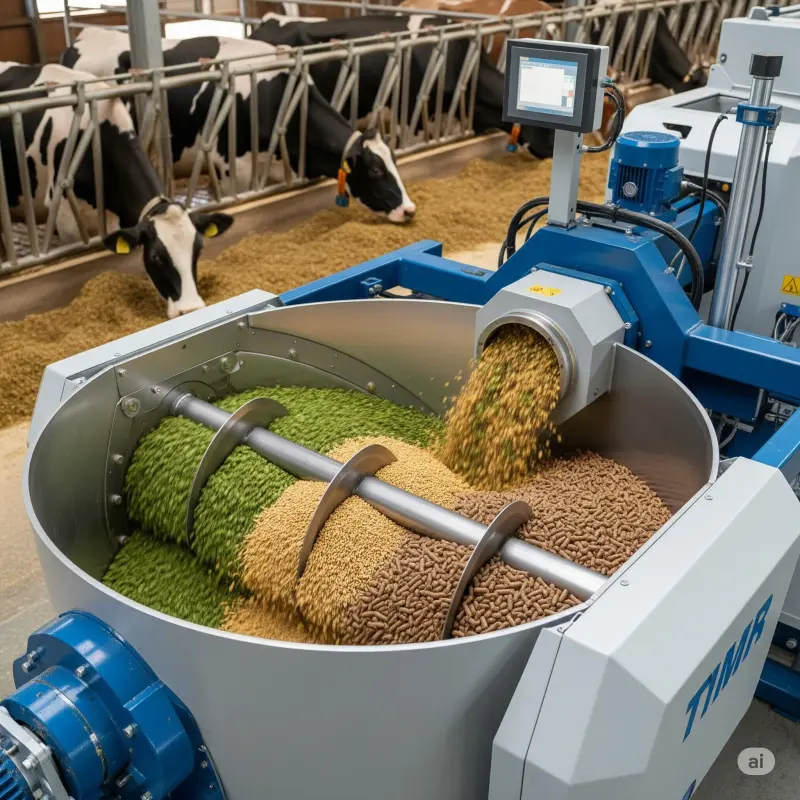
- Mixing: Homogeneous mixing of all prepared raw materials prevents selective eating by animals and ensures balanced nutrient intake with every bite.
- Feed Mixer (Total Mixed Ration TMR Mixer): Essential for large and medium dairy farms. These machines create a "Total Mixed Ration (TMR)" by chopping forages and distributing all ingredients evenly.
- Loading Order: Generally, long forages (straw, hay) are added first, then silages (corn silage, Berseem silage), followed by concentrates (grains, meals), and finally liquid ingredients (molasses) and mineral/vitamin pre-mixes. This order is important for a homogeneous mix.
- Mixing Time: Mixing should be done for a sufficient period (usually 5-15 minutes) depending on the machine type and ration content. Overmixing can break down fiber particles and harm rumen health.
- Water Provision: Ensure cows always have free access to clean, fresh water. Water is vital for milk production.
- Feed Management: Clean feed bunks and regular feed push-up encourage feed intake.
Step 5: Applying Nutrition and Continuous Monitoring
After feeding the ration to your animals, it is important to continuously monitor their responses and performance to evaluate the ration's effectiveness and make adjustments as necessary.
- Feed Intake: Are the cows consuming the feed eagerly? Are there excessive refusals in the bunks? Is daily dry matter intake reaching the target level?
- Milk Production and Quality: Regularly record daily milk production, milk fat and protein percentages, and compare them to your targets.
- Body Condition: Regularly check the cows' body condition score. Excessive weight loss or gain may indicate metabolic issues.
- Manure Examination: Manure consistency, color, and content (undigested feed particles) provide important information about digestive health. If there are signs of diarrhea, constipation, or acidosis, review the ration immediately.
- Health Status: Monitor the animals' general vitality, rumination activity, and any signs of illness.
- Record Keeping: Detailed recording of ration changes, animal performance data, health status, and feed costs builds a valuable database for future decisions.
Important Points to Consider When Making Your Own Dairy Feed
- Hygiene and Storage: Store all raw feed materials and prepared feed in cool, dry places away from moisture, mold, and pests. Hygienic conditions preserve feed quality.
- Gradual Transition: When making major changes to the ration (adding new raw materials, changing ratios), do so **gradually, with a 7-10 day transition period**, to allow the cows' digestive system to adapt. Sudden changes can cause digestive problems.
- Water Quality: Water is very important for milk production. Ensure cows always have access to clean, fresh, high-quality water.
- Expert Support is Essential: Formulating your own dairy feed is a complex task requiring knowledge and experience. Consulting an animal nutrition specialist initially and periodically is the most accurate and safe approach for animal health and economic efficiency.
Preparing your own dairy feed will give you great power in managing feed costs, ensuring feed quality, and enabling your cows to reach their highest performance on your farm. Although this process requires effort and continuous learning, the benefits it brings will be worth your effort.