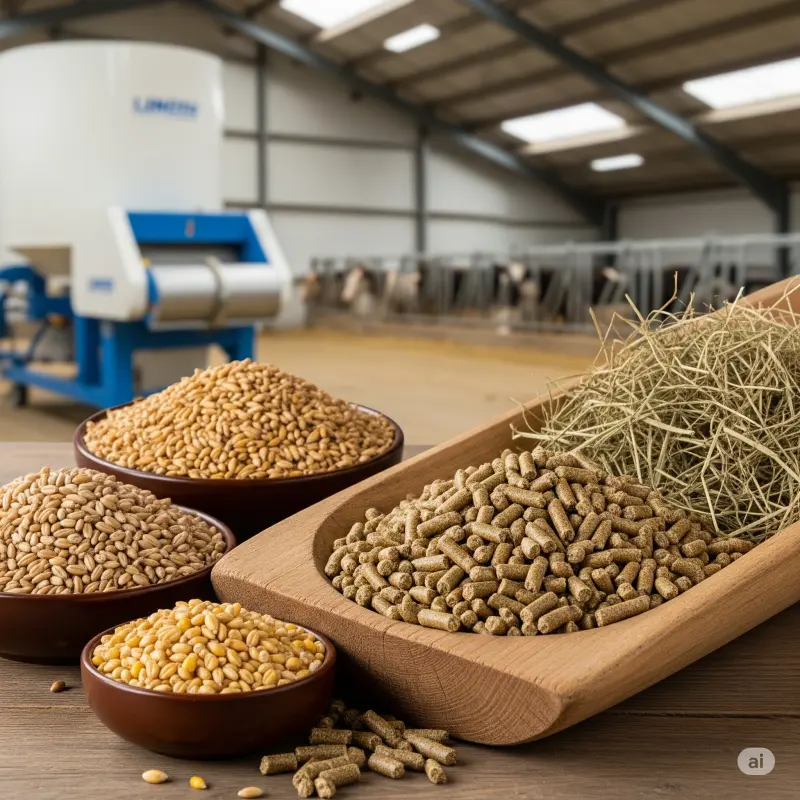
How to Prepare a Complete Feed Ration (TMR) Weighing 1 Ton: A Practical Step-by-Step Guide
Step-by-step guide to preparing a complete feed ration (TMR) weighing 1 ton. Practical information on selecting raw materials, feed formulation, mixing order, and important points to consider.

How to Prepare a Complete Feed Ration (TMR) Weighing 1 Ton: A Practical Step-by-Step Guide
The Total Mixed Ration (TMR) system is a feeding method designed to meet all the nutritional needs of animals in a single homogeneous mixture, especially in modern dairy and meat farms. Preparing a complete feed ration weighing 1 ton provides a practical and economical solution, particularly for small and medium operations. So how can you prepare a complete feed ration of this size correctly and efficiently? Here is a step-by-step guide.
Importance of Preparing the Complete Feed Ration (TMR)
The Total Mixed Ration system eliminates animal selectivity in feed intake, ensuring they receive balanced nutrients with every bite. This means **more stable rumen health**, **increased feed utilization**, **higher productivity**, and **reduced risk of metabolic diseases**. Preparing a 1-ton ration is ideal for operations with smaller feed mixers or fewer animals.
---Steps to Prepare a Complete Feed Ration (TMR) Weighing 1 Ton
The basic steps to follow when preparing a complete feed ration weighing 1 ton are the same principles applied to larger quantities, but the scale and details to pay attention to may differ.
1. Step: Determining the Feed Ration Formulation
First, you need to know the group of animals this ration is being prepared for (dairy cows, beef calves, dry cows, etc.) and their specific nutritional needs. Based on these needs, you should have a **1-ton feed ration formulation** created by an animal nutrition specialist.
Example of a Complete Feed Ration (TMR) Formulation for Dairy Cows Weighing 1 Ton (approximate percentages - always get expert approval!):
| Raw Feed Material | Percentage (%) | Quantity (kg/1 Ton TMR) | Description |
|---|---|---|---|
| Corn Silage | 40 | 400 | Source of energy and digestible fiber |
| Alfalfa Hay | 15 | 150 | Source of protein and fiber |
| Rolled Barley | 20 | 200 | High energy source (starch) |
| Soybean Meal | 10 | 100 | High protein source |
| Dried Beet Pulp | 8 | 80 | Digestible fiber and energy |
| Molasses (liquid) | 2 | 20 | Palatability and quick energy |
| Supplemental Mix for Dairy Cows (minerals + vitamins) | 1 | 10 | Meets all cows' mineral and vitamin needs |
| Total | 100 | 1000 |
Important Note: The feed ration mentioned above is just an example. **You must use a feed ration specifically designed by an animal nutrition specialist** based on your farm conditions, the analyzed values of your raw materials, your cows' production level, and lactation stage. Incorrect feed rations can lead to production losses or health problems.
2. Step: Preparing and Inspecting Raw Materials
The quality and form of each raw material in your feed ration is important.
- Quality Control: Ensure all raw materials you will use (silage, hay, grains, meals, etc.) are free from mold, fresh, clean, and pest-free. Visual inspection, smell tests, and laboratory analyses if necessary should be performed.
- Particle Size: Ensure that roughages (silage, hay) are sufficiently chopped in the feed mixer. Very long particles can cause feed selectivity. Very fine particles can harm rumen health. The ideal particle size is usually between 2-5 cm.
- Weighing Equipment: A **precise scale** or **electronic weighing system** on the feed mixer is necessary to use the correct amount of each raw material.
3. Step: Preparing the Feed Mixer for Use
To prepare a complete feed ration weighing 1 ton, vertical or horizontal feed mixers with capacities ranging from 3 to 8 cubic meters are usually used.
- Cleanliness: Ensure the machine is not dirty with remnants from previous feeding. A clean machine maintains feed ration quality.
- Function Check: Are the blades sharp? Does the weighing system work correctly? Do the mixing motors rotate smoothly?
4. Step: Loading and Mixing Feeds in the Correct Order
To obtain a homogeneous mixture, it is important to load the raw feed materials into the machine in a specific order.
- Long-fiber roughages (first): Load the longest particle and slowest digesting raw materials in the feed ration (like straw, dry hay) into the machine first. These feeds take longer to chop and break. At this stage, run the machine for a short period (about 2-3 minutes) to ensure breaking these feeds.
- Quantity: 150 kg alfalfa hay in the example ration.
- Silage: Then add silage like corn silage. Silage helps mix the hay better and soften it.
- Quantity: 400 kg corn silage in the example ration.
- Dry concentrates (grains and meals): After adding silage, add dry concentrates like grains (rolled barley, cracked corn) and protein sources (soybean meal, sunflower meal).
- Quantity: 200 kg rolled barley, 100 kg soybean meal, 80 kg dried beet pulp in the example ration.
- Mineral, vitamin, and additive mixes: Since these products are in very small quantities, they should be added last, after mixing the other feeds. This ensures even distribution. Sprinkle the supplemental mixes directly into the mixing area of the machine and ensure they are well mixed.
- Quantity: 10 kg supplemental mix for dairy cows in the example ration.
- Liquid additives (last): If there are liquid additives like molasses, they are added at the very end, after mixing all other feeds, by slowly spraying or pouring them into the mixer. This facilitates adhesion and homogeneous mixing.
- Quantity: 20 kg molasses in the example ration.
5. Step: Mixing for Sufficient Time
After loading the feeds in the correct order, continue mixing until a homogeneous mixture is obtained.
- Mixing Time: This time usually ranges from 5 to 15 minutes, depending on the machine type, capacity, and feed particle size. Overmixing can break down roughages and reduce fiber effectiveness, negatively affecting rumen health.
- Uniformity Check: You can check mixture uniformity by hand. The mixture should not contain separate clumps of different raw materials; it should have a consistent appearance throughout. More scientific measurements can also be performed using tools like the Penn State Particle Separator (PSPS).
6. Step: Distributing and Presenting the Feed to Animals
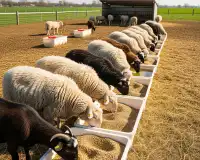
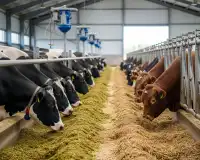
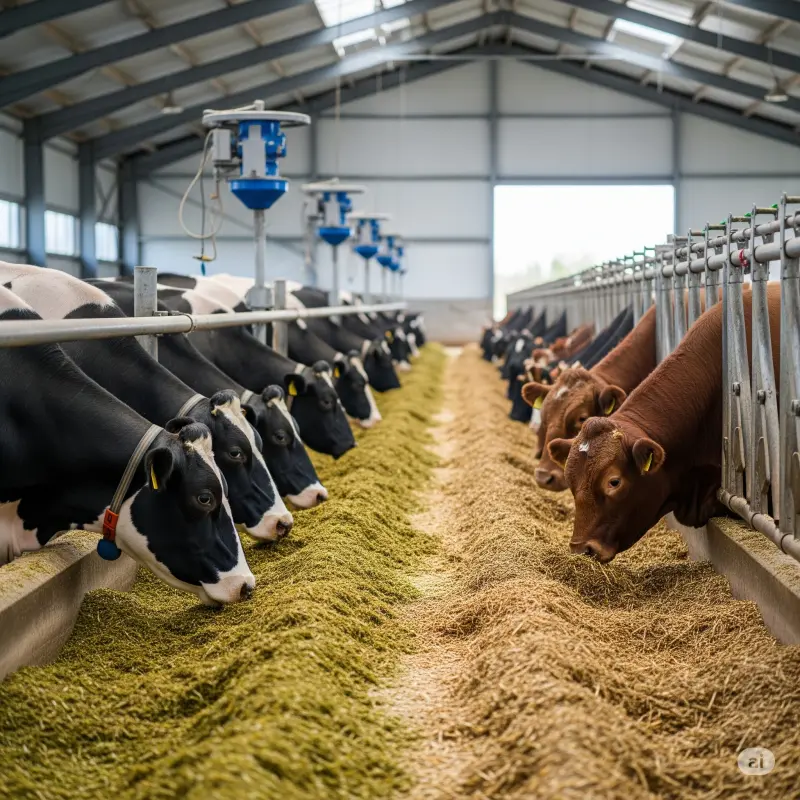
Distribute the prepared complete feed ration (TMR) evenly and regularly in the mangers.
- Distribution: Distribute the feed so that animals can easily access it in the mangers. It is important to create an even layer of feed along the entire manger.
- Manger Management: Ensure manger cleanliness. By pushing feed toward the animals several times a day, ensure continuous feed access and encourage consumption.
- Feeding Frequency: The complete ration (TMR) is usually offered once or twice a day. However, more frequent feeding (like 3 times a day) can increase feed intake for high-producing animals.
Important Points to Consider
- Water Supply: No matter how good the TMR is, if there is no free access to clean, fresh water, productivity will decline. Ensure water sources are sufficient and clean.
- Feed Refusals: Always leave a small amount (like 2-5%) of feed refusals in the mangers to prevent cows from sorting and indicate unrestricted feed intake. However, if there are excessive refusals, review the ration amount.
- Record Keeping: Regularly recording when and how much of each feed ration was prepared, and animal feed intake and performance (milk production, weight gain), is crucial for future ration adjustments and cost analysis.
- Equipment Maintenance: Regular maintenance of the feed mixer ensures its long life and efficient operation. Sharp blades are essential for mixing quality.
Properly and accurately preparing a complete feed ration (TMR) weighing 1 ton will not only improve your animals' health and productivity but also enable you to manage your farm's feed costs effectively. Remember to seek expert support and continuous monitoring!