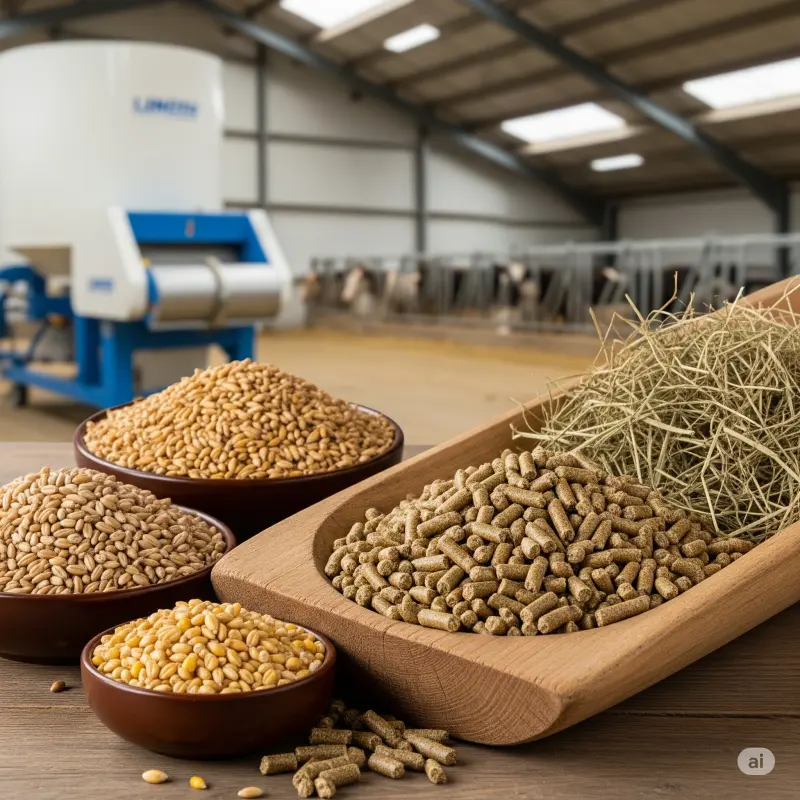
Preparing Feeds with Rolled Barley: A Powerhouse of Energy and Palatability for Your Animals
How to prepare balanced, energy-rich rations for your animals using rolled barley? A step-by-step guide, quality monitoring, and tips for proper use.

Preparing Feeds with Rolled Barley: A Powerhouse of Energy and Palatability for Your Animals
In animal nutrition, energy is an indispensable element for productivity and health. Among grains, **rolled barley** holds an important place, especially in ruminants, due to its high energy content, digestibility, and good taste. Rolled barley is obtained by crushing or rolling the grains to facilitate digestion. So how do you incorporate rolled barley into your rations, and what should you pay attention to? Here is a practical step-by-step guide!
Why is Rolled Barley So Important?
The main reasons for the widespread use of rolled barley in animal feeding are:
- High Energy Source: Barley is a concentrated energy source for animals, especially due to its starch and digestible fiber content. This is crucial for milk production, weight gain, and overall vitality.
- High Digestibility: The rolling process breaks the outer hull of the barley grain, making the internal starch more accessible to digestive enzymes. This means the animal benefits more from the feed.
- Good Palatability: It is a feed that animals consume easily, increasing feed intake.
- Rumen Health: Its starch ferments more slowly than corn, which can help maintain a more balanced rumen pH and reduce the risk of acidosis.
- Cost Advantage: It can be a more cost-effective energy source compared to corn, depending on the region.
Steps for Preparing the Ration with Rolled Barley
To create a balanced and effective ration containing rolled barley, follow these steps carefully:
1. Step: Determine Your Animal's Needs
As with the basis of any ration preparation process, first determine the **nutritional needs** of the animal you will feed (dairy cows, calves, lambs, sheep, etc.) according to its type, age, weight, and physiological state. For example:
- Dairy Cows: Energy and protein needs vary based on milk production level.
- Calves: High energy and protein are necessary for rapid live weight gain.
- Lambs and Kids: A balance of energy and protein must be established specific to the growth phase.
After determining this information with the help of a nutritionist or reliable feeding tables, note the daily amounts of **dry matter (DM)**, **crude protein (CP)**, **metabolizable energy (ME)**, and **minerals/vitamins** that the animal needs.
2. Step: Identify Raw Feed Ingredients and Determine Their Quality
It is essential to know the nutritional values **of rolled barley** and all other forage/concentrate feeds you will use in your ration.
- Quality of Rolled Barley: Moisture content, cleanliness, and rolling quality of the barley flakes are important. Avoid using moldy or wet rolled barley. Regular feed analyses allow you to know the exact nutritional values of your barley.
- Other Forages: Consider the quality and values of forages like alfalfa, grass silage, corn silage, or hay.
- Protein Sources: While rolled barley is a good energy source, its protein content is usually insufficient. Therefore, you will need protein sources like soybean meal or sunflower meal.
3. Step: Calculate Ration Proportions
Once you have determined the animal's needs and the nutritional values of the raw feed ingredients, calculate the amount of each feed. When incorporating rolled barley into the ration, pay attention to the following:
- Determining the Proportion: Rolled barley will constitute a certain percentage of the total dry matter of the ration. This percentage varies depending on the animal type, age, and production goal. For example, higher ratios (30-50%) can be used in beef calves, while more balanced ratios (20-40%) can be used in dairy cows to maintain rumen health.
- Balancing Energy and Protein: Balance protein sources to complement the high energy content of rolled barley.
- Fiber Requirements: Since rolled barley is an energy-dense feed, it is important to maintain sufficient fibrous feed in the ration for rumen health.
- Mineral and Vitamin Supplements: Rolled barley and other basic feeds do not meet all the animal's mineral and vitamin needs. Therefore, add appropriate mineral and vitamin premixes to the ration based on the animal's age and production level.
- Transition Period: If you are adding rolled barley to the ration for the first time or increasing its amount, do so gradually over several days to allow the animal's digestive system to adapt.
4. Step: Mixing and Offering the Ration
After making your calculations, mix the feeds homogeneously and offer them to your animals:
- Mixing: While manual mixing can be done for small herds, using a feed mixer is best for large herds. A feed mixer ensures even distribution of all feeds, including rolled barley.
- Feeding Frequency: Dividing the daily ration into several meals reduces the burden on the animal's digestive system and allows for better feed utilization.
- Water Provision: Ensure animals always have free access to clean, fresh water. Water is essential for digestion and metabolism.
- Feeder Cleanliness: Regularly maintaining feeder cleanliness preserves feed quality and reduces disease risk.
5. Step: Monitoring and Making Adjustments
After offering the ration to your animals, monitor their responses closely:
- Feed Intake: Are the animals consuming the feed with appetite? Are there any feed refusals?
- Body Condition: Are the animals gaining weight or producing milk as targeted? Is there weight loss or excessive gain?
- Manure Consistency: Is the manure consistency normal? Are there digestive issues like diarrhea or constipation?
- Overall Health and Behavior: What is the general health status, vitality, and behavior of the animals?
Based on these observations, you may need to make adjustments to the ration. For example, if there is diarrhea, you can reduce the amount of rolled barley or increase the fibrous feed ratio. If productivity does not increase, you can re-evaluate energy or protein supplements.
Practical Tips for Using Rolled Barley
- Rolling Quality: Ensure the barley grain is not ground into very fine flour. Very fine grinding can increase the risk of rumen acidosis. The ideal is to crack the grain and expose the starch.
- Storage: Rolled barley should be stored in cool, dry places away from moisture. Prefer well-ventilated areas to prevent mold.
- Transition Period: As with any new feed source, when incorporating rolled barley into the ration for the first time or significantly changing its amount, make a gradual transition to allow the animal's digestive system to adapt.
- Consulting Experts: In large-scale operations or if you lack experience in ration preparation, seeking professional help from a veterinarian or animal nutritionist is the most appropriate approach for animal health and economic efficiency.
Rolled barley, when used correctly, can be a powerful energy source in your animal nutrition. By following the steps in this guide and carefully monitoring your animals, you can prepare the most suitable and effective ration for them.